 comparison
Porcelain vs Natural Stone Paving: Pros and Cons
Last Updated: November 2, 2026
Quick Summary
Porcelain paving is a manufactured slab that is low maintenance, stain resistant and lighter than most stone, with a uniform look. Natural stone is cut from quarried rock, has more character and a lower environmental footprint, but usually needs sealing and is heavier. Porcelain suits busy family gardens, while natural stone suits buyers who value variation.
- Porcelain needs only a quick sweep and wash, while natural stone usually needs sealing every few years.
- Porcelain is generally lighter and easier to handle than most natural stone.
- Porcelain can become hot in direct sunlight, which matters for bare feet.
- Natural stone has a lower environmental footprint because it avoids energy-intensive firing.
- Porcelain typically carries a higher initial material cost than many natural stones.
Table of Contents
- How Porcelain Paving and Natural Stone Differ
- Porcelain Paving: Pros and Cons
- Natural Stone Paving: Pros and Cons
- Porcelain Paving Maintenance Compared with Natural Stone Patio Maintenance
- Porcelain vs Sandstone Paving: Which Suits Your Garden
- Porcelain Paving Cost Against Natural Stone
- Booking a Paving Consultation with Custom Landscapes
- Frequently Asked Questions
How Porcelain Paving and Natural Stone Differ
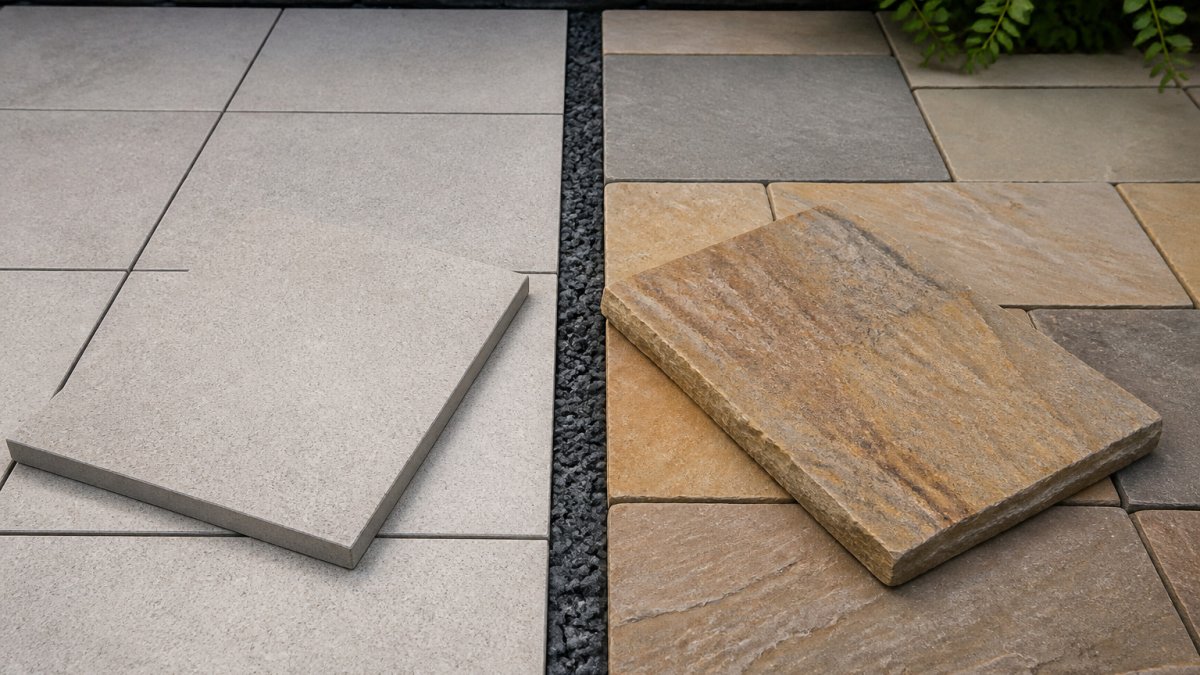
Porcelain paving and natural stone are both durable choices for patios, driveways and garden paths, but they are made in very different ways. Natural stone is cut directly from quarried rock, while porcelain is a manufactured slab made from dense clays fired at high temperatures. That difference shapes almost everything else, from cost and weight to how each surface behaves through a British winter.
Natural stone has a lower environmental footprint than porcelain, according to the Natural Stone Institute sustainability analysis. Porcelain, by contrast, relies on energy-intensive firing. Its uniform colour and clean edges come from the factory, while natural stone keeps the variation of the original rock.
Porcelain Paving: Pros and Cons
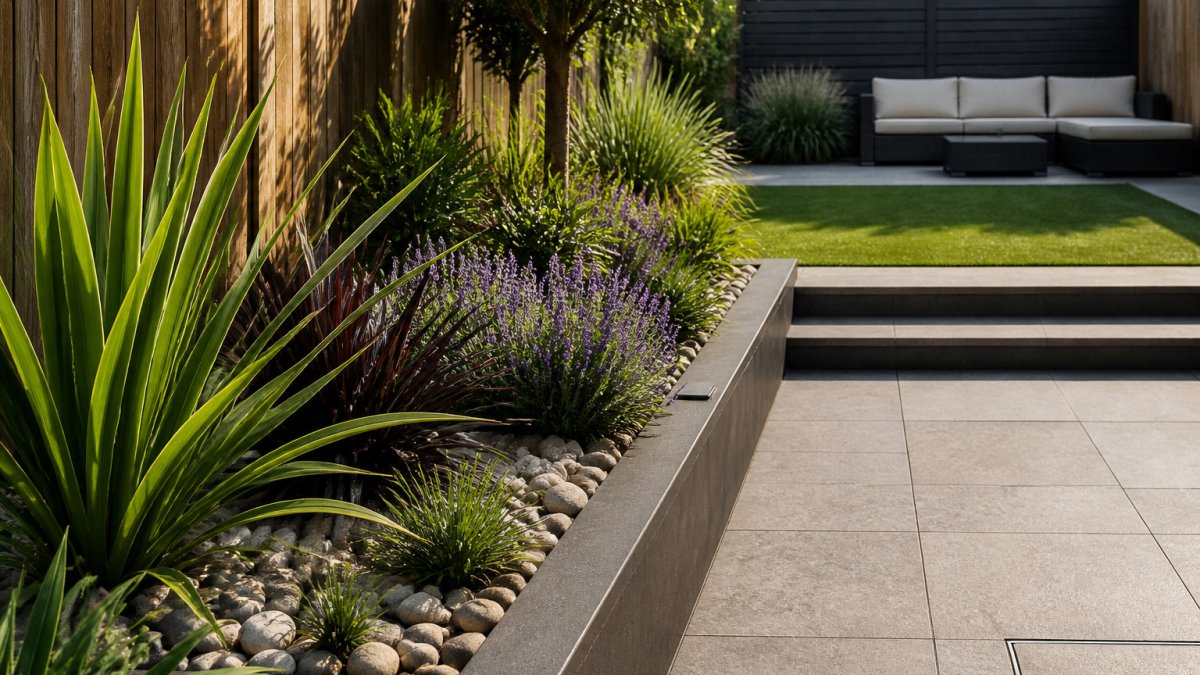
Porcelain is the modern choice for homeowners who want a consistent look with minimal upkeep. It is non-porous, so it does not need sealing to stay water-resistant. Industry reporting for 2026 notes that porcelain resists fading and needs Best Version Media's 2026 paving review virtually no maintenance for year-round outdoor use.
The main advantages are:
- Low maintenance: A quick sweep and a wash are usually enough.
- Stain resistance: Spills sit on the surface rather than soaking in.
- Lighter weight: Porcelain slabs are generally easier to handle and lift than most natural stone.
- Consistent finish: Uniform colour suits contemporary designs.
The drawbacks are just as real. Porcelain typically carries a higher initial material cost than many natural stones. It can also become hot in direct sunlight, which matters for bare feet around a family garden. Some homeowners find the uniform look less characterful than stone.
Where Porcelain Paving Works Best
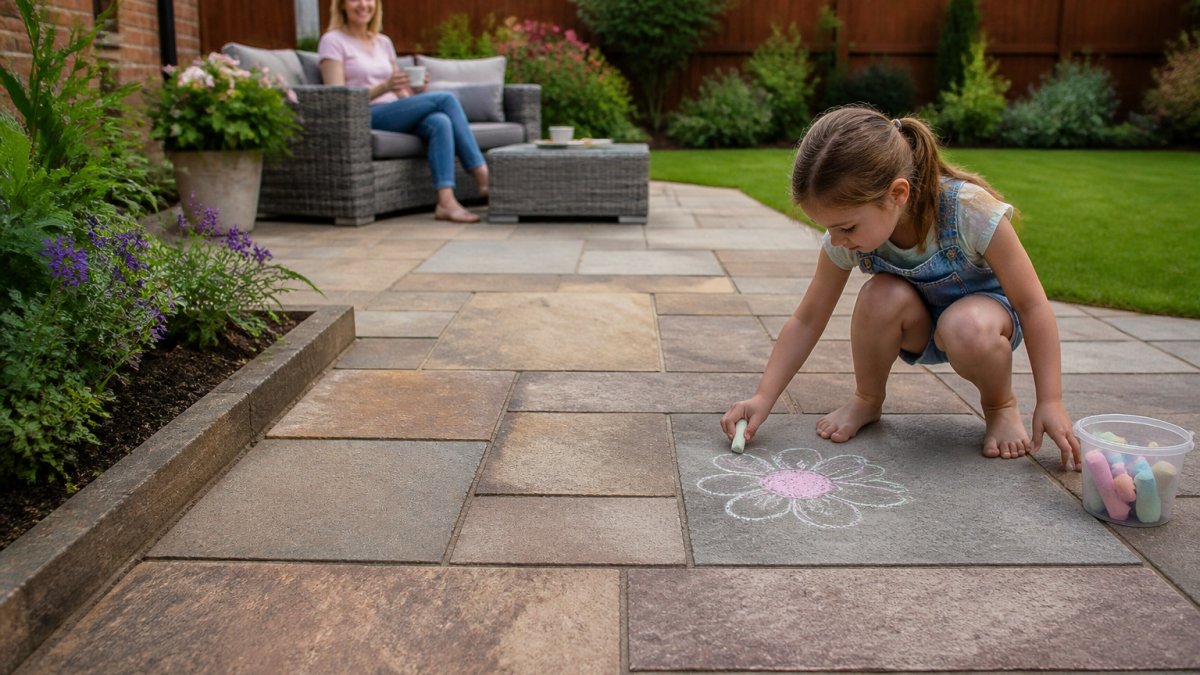
Porcelain suits high-traffic areas, family gardens and spaces where low maintenance matters most. Its non-porous surface copes well with muddy paws and spilt drinks, which makes it practical around children and pets. For a shaded, cooler garden, the heat issue is less of a concern. For more on durability and safety in family gardens, see our guide to durable paving for family gardens.
The table below summarises how porcelain and natural stone compare on the points the article covers.
| Factor | Porcelain | Natural stone |
|---|---|---|
| Made by | Manufactured, fired at high temperatures | Cut directly from quarried rock |
| Environmental footprint | Energy-intensive firing | Lower footprint |
| Maintenance | Quick sweep and wash | Usually needs sealing every few years |
| Weight | Generally lighter | Generally heavier |
| Appearance | Uniform colour and clean edges | Natural variation and character |
| Heat in sun | Can become hot | Not stated |
| Upfront cost | Typically higher material cost | Varies widely by stone type |
Natural Stone Paving: Pros and Cons
Natural stone appeals to buyers who value character. Each slab carries its own texture, colour variation and history, and this is something a manufactured product cannot fully copy. Natural stone is also strong and flexible enough to bear heavy loads, as Sui Stone's structural performance comparison points out.
Its main advantages include:
- Character: Natural variation gives a unique look that weathers well over time.
- Strength: It handles heavy loads and resists cracking.
- Lower environmental footprint: Less energy-intensive processing than porcelain.
The downsides are that natural stone is heavier, usually needs sealing to resist staining, and can need more regular cleaning. Some types also lose their colour or develop moss in damp shade. Pricing varies widely by stone type, so it is worth comparing samples before committing.
Porcelain Paving Maintenance Compared with Natural Stone Patio Maintenance
Maintenance is where the two materials diverge most. Porcelain needs little more than regular sweeping and occasional washing, because its sealed-off surface does not absorb liquids. Natural stone usually needs resealing every few years, depending on the type and how much traffic it takes.
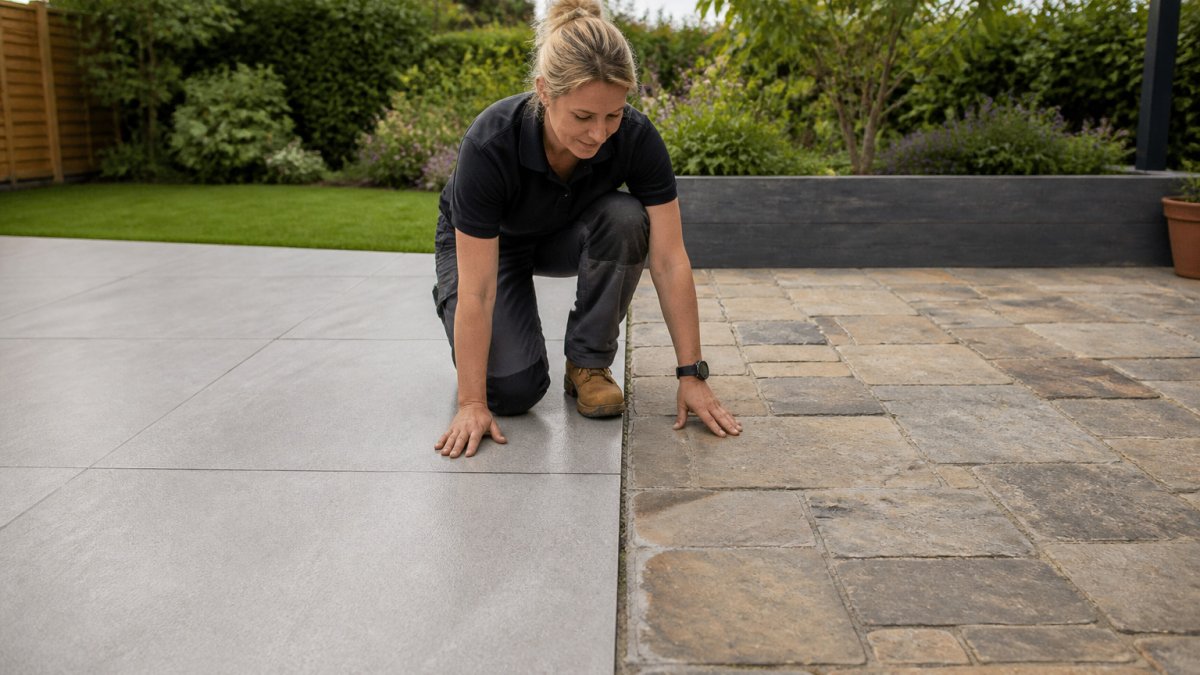
A homeowner kneeling beside a smooth porcelain patio and a textured natural stone patio will notice the difference quickly. The porcelain looks the same after a season, while the stone shows the wear and patina that many people prefer. Choose based on how much time you want to spend on upkeep.
Porcelain vs Sandstone Paving: Which Suits Your Garden
Sandstone is the most common natural stone rival to porcelain. It offers a warm, earthy look that porcelain cannot match, but it is more porous and more sensitive to staining. Porcelain wins on durability and ease of care, while sandstone wins on warmth and character.
If your garden is shaded and you want a traditional feel, sandstone can be a strong choice. If you have young children, dogs, or a busy outdoor space, porcelain is usually the more practical option. Consider how the area is used, not just how it looks on the day it is laid.
Porcelain Paving Cost Against Natural Stone
Porcelain generally has a higher upfront material cost than many natural stones, though this depends heavily on the specific product, quantity and supplier. Exact prices depend on quantity, delivery and the chosen finish, so request a quote for current figures.
It is also worth weighing lifetime costs. Porcelain's lower maintenance can offset its higher purchase price over time, especially if you would otherwise pay for regular sealing. For current prices on specific materials, get in touch with us directly for a quote.
Booking a Paving Consultation with Custom Landscapes
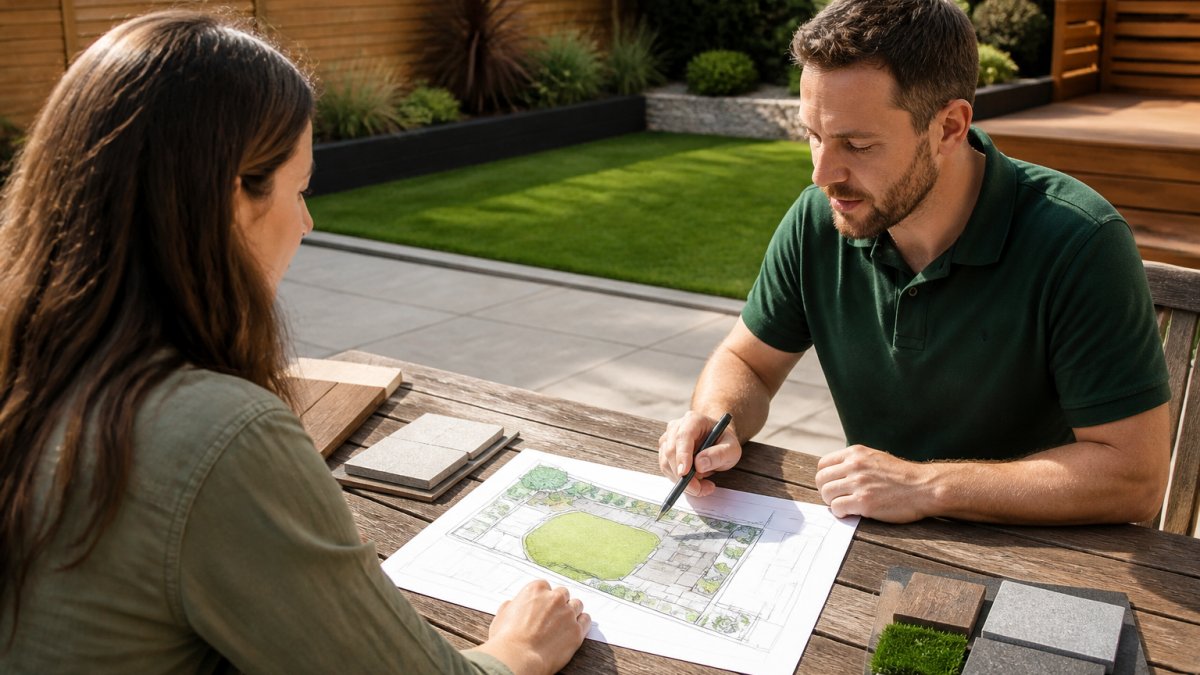
Choosing between porcelain and natural stone is easier with expert guidance on your own garden. At Custom Landscapes, we design and install paving, decking, artificial grass and fencing, with a focus on durable, low-maintenance solutions that suit your budget. Our team will talk through the trade-offs with you before any work begins.
To see the range of work we offer, browse our services. You can view previous projects in our gallery, and when you are ready to talk through your plans, contact us to arrange a consultation. If you want to understand how quotes work before getting in touch, read our guide on how to get a quote for custom garden design.
Frequently Asked Questions
Is porcelain paving better than natural stone?
Neither material is better in every case. Porcelain paving is non-porous, does not need sealing to stay water-resistant, and is lighter to handle, which suits gardens where low maintenance matters most. Natural stone offers unique textures and a weathered, timeless character, and it is generally strong enough to bear heavy loads. The right choice depends on how you use the space, how much upkeep you want to do, and the look you prefer. Custom Landscapes can talk through the options for your garden.
What are the disadvantages of porcelain paving?
Porcelain can reach higher surface temperatures than natural stone when it sits in direct sunlight, which may affect comfort in a garden used for lounging or play. Its uniform, manufactured finish also lacks the natural variation many homeowners value in stone. Pricing depends on quantity, dates and delivery, so request a current quote for your project.
Which is easier to maintain, porcelain or natural stone paving?
Porcelain is generally the easier of the two to maintain. It is non-porous, so it does not require sealing to remain water-resistant, and it is generally regarded as needing little upkeep for year-round outdoor use. Natural stone can be porous and may need periodic sealing and cleaning to limit staining and weathering. Natural stone also develops character as it ages, which some owners prefer despite the extra care.
Does porcelain paving become slippery when wet?
Slip resistance depends on the specific surface finish rather than the material alone. Porcelain is available in textured or matt finishes designed for outdoor use, while highly polished surfaces can become slippery when wet. When comparing options, ask for the slip rating of the finish you are considering and choose a textured surface for areas near pools, steps or wet-weather routes.