 ultimate-guide
Garden Landscaping Services for Homeowners: 2026 Guide
Last Updated: October 23, 2026
Quick Summary
Garden landscaping services for homeowners cover the design, groundwork and construction of an outdoor space, from paving and decking to turfing, planting and fencing. A landscaper changes the structure of the space itself, including levels, drainage, surfaces, boundaries and planting, while a gardener maintains what already exists. Getting the wrong one for the job wastes money twice.
- Drainage should be designed before any surface is laid, so levels and falls are planned at the survey stage.
- Artificial grass suits heavy use and low time, while real turf costs less upfront and supports soil health.
- Garden landscaping cost depends on size, access, ground conditions, materials and drainage requirements.
- Ask what warranty covers the workmanship and for how long before signing anything.
- Never accept a quote that omits the sub-base specification, because cheap paving fails at the base.
Table of Contents
- Garden Landscaping Services for Homeowners: What You Actually Get
- Landscaping Styles Compared: Which Suits Your Garden
- What Garden Landscaping Cost Depends On
- Garden Renovation Ideas for Underused Space
- Low-Maintenance Garden Ideas That Still Look Good
- Questions to Ask a Landscaper Before You Sign
- Conclusion
- Frequently Asked Questions
Garden Landscaping Services for Homeowners: What You Actually Get
Garden landscaping services for homeowners cover the design, groundwork and construction of an outdoor space, from paving and decking to turfing, planting and fencing. At Custom Landscapes, we build these spaces to a fixed brief and a fixed budget, so the finished garden matches what you agreed at the start.
The distinction matters more than most people expect. A gardener maintains what exists. A landscaper changes the structure of the space itself: levels, drainage, surfaces, boundaries and planting. Getting the wrong one for the job wastes money twice, once on the wrong work and again on fixing it.
Below, we break down what each service actually involves, how styles compare, what drives garden landscaping cost, and the questions that separate a reliable contractor from an expensive lesson.
Landscaper or gardener: the difference
A landscaper designs and constructs hard and soft landscaping: paving, decking, walls, drainage, turf, planting schemes and fencing. A gardener maintains an established garden through mowing, pruning, weeding and seasonal care.
Most homeowners need both at different points. The confusion arises when someone books maintenance for a construction job, or pays construction rates for routine upkeep.
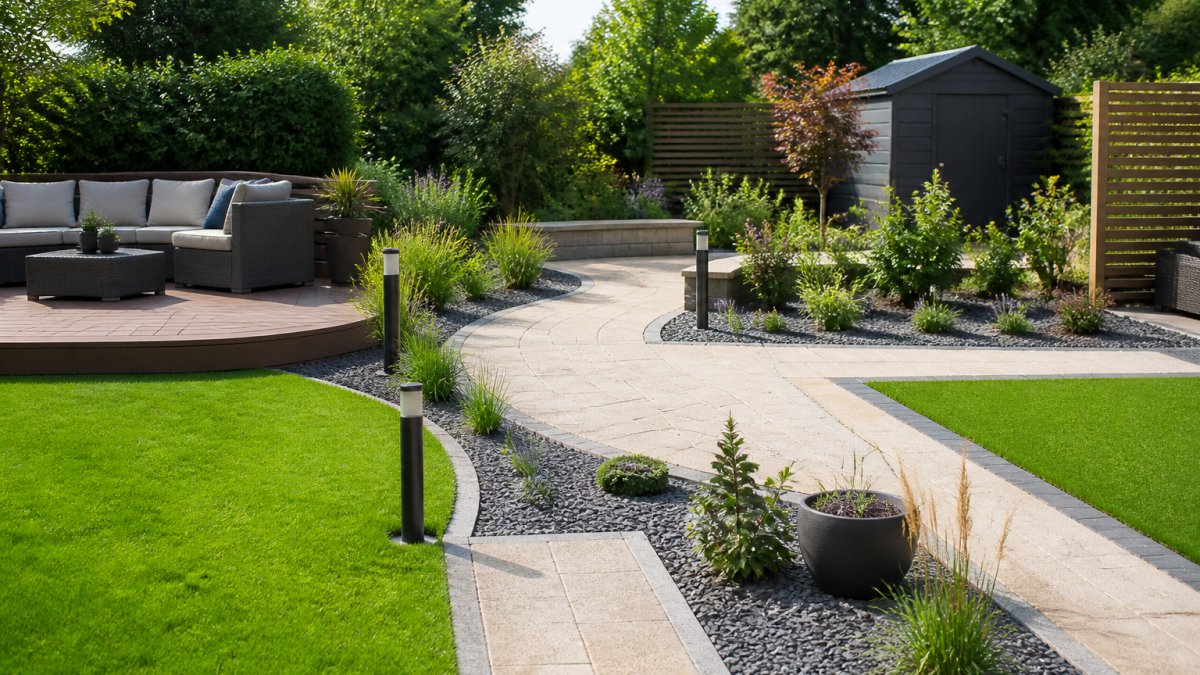
Hard landscaping refers to built elements such as paving, decking and retaining walls. Soft landscaping covers turf, borders, trees, shrubs and gravel planting. A good garden landscaping project coordinates the two so the surfaces drain into the planting rather than around it.
One practical warning: drainage should be designed before any surface is laid. Retrofitting a fall into finished porcelain paving means lifting it. We plan levels and falls at the survey stage for exactly this reason.
Landscaping Styles Compared: Which Suits Your Garden
The right style is the one that matches how you use the garden, not the one that photographs best. Families with young children and dogs generally do better with durable surfaces and open sightlines; entertainers lean toward defined patio zones; low-maintenance households benefit from fewer lawn edges and more structure.
Here is how the main options compare in practice.
| Style | Surfaces | Maintenance Level | Best For |
|---|---|---|---|
| Contemporary | Porcelain paving, rendered walls, gravel beds | Low | Clean lines, small plots |
| Cottage | Mixed borders, gravel paths, timber edging | Medium to high | Established planting, wildlife |
| Family practical | Paving, artificial grass, secure fencing | Low | Children and pets |
| Naturalistic | Turf, native planting, loose gravel | Medium | Larger gardens, softer feel |
Paving, decking and gravel
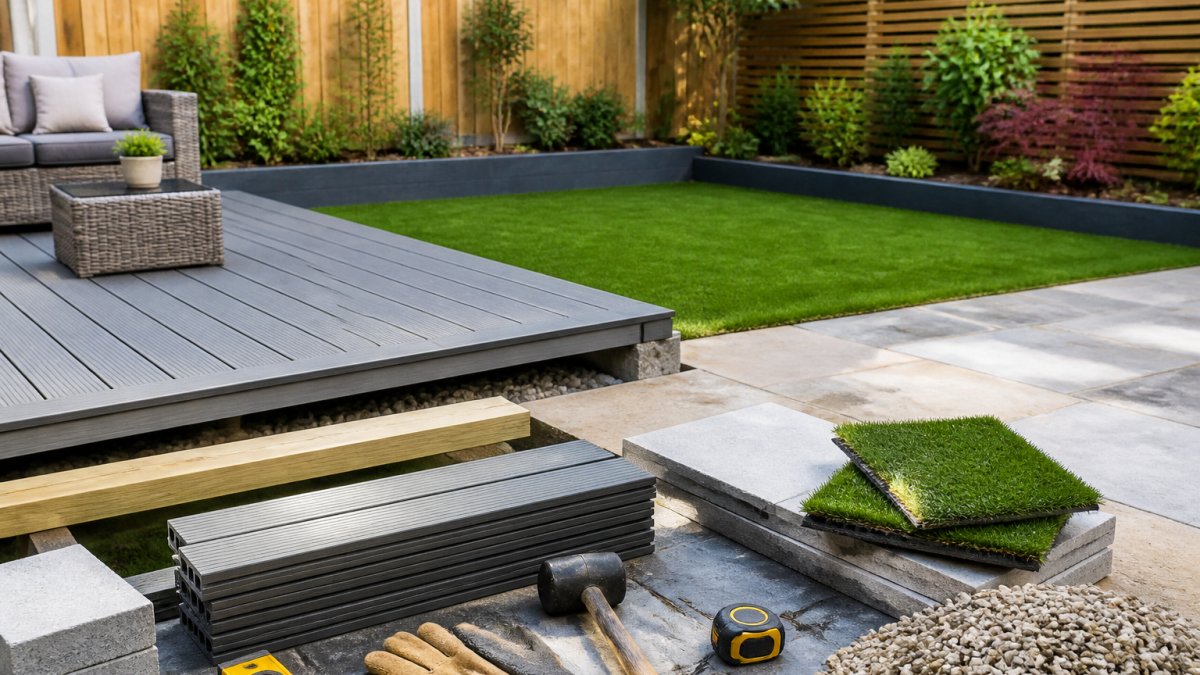
Paving gives the most durable, level surface and works for patios, paths and seating areas. Porcelain and natural stone both handle heavy foot traffic and clean down easily, which matters with pets.
Decking suits sloped sites and raised seating, and timber softens a hard-edged scheme. It needs periodic treatment to stay sound, so factor that into long-term upkeep.
Gravel is the cheapest way to cover a large area and handles drainage well when laid over a proper sub-base. It is not ideal for bare feet or wheeled toys, so keep it away from play zones.
Artificial grass and turfing
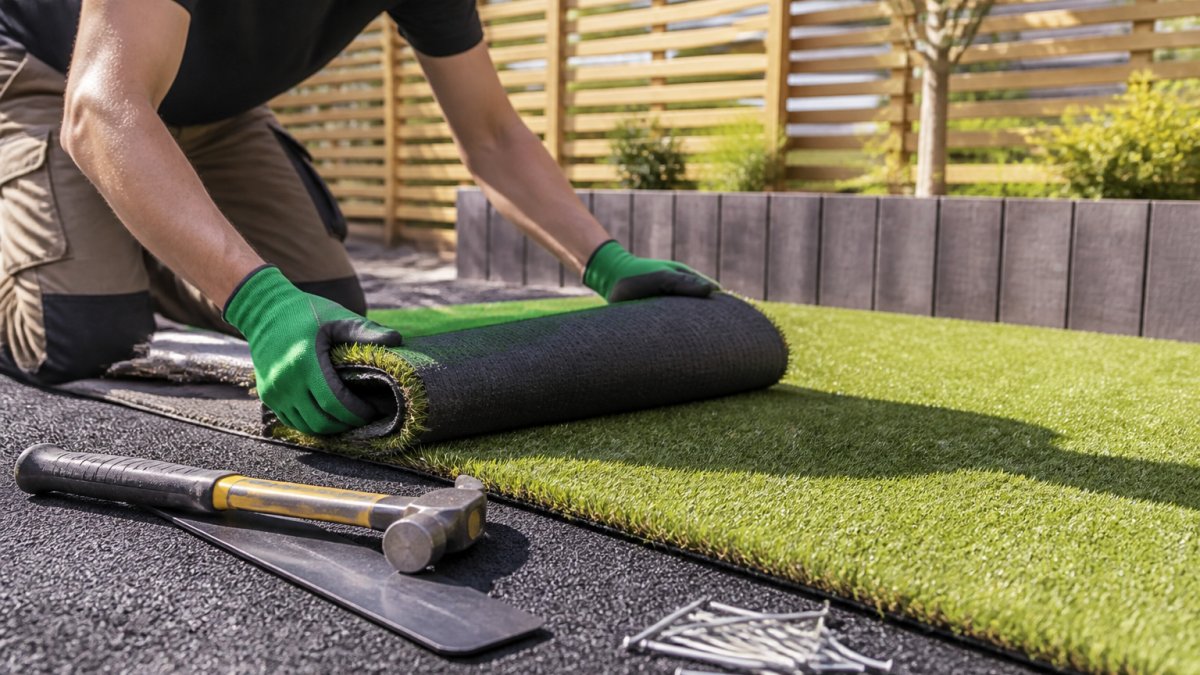
Artificial grass delivers a consistent, mud-free surface all year, which is why families with dogs and toddlers ask for it. Quality varies sharply: a denser pile with a natural colour variation and a proper sub-base reads as a lawn rather than a carpet. Cheap installations look plastic within a season.
Real turf costs less upfront and supports soil health and wildlife. It needs mowing, watering in dry spells and occasional repair. Choose turf where the garden is established and someone enjoys the upkeep; choose artificial grass where use is heavy and time is short.
What Garden Landscaping Cost Depends On
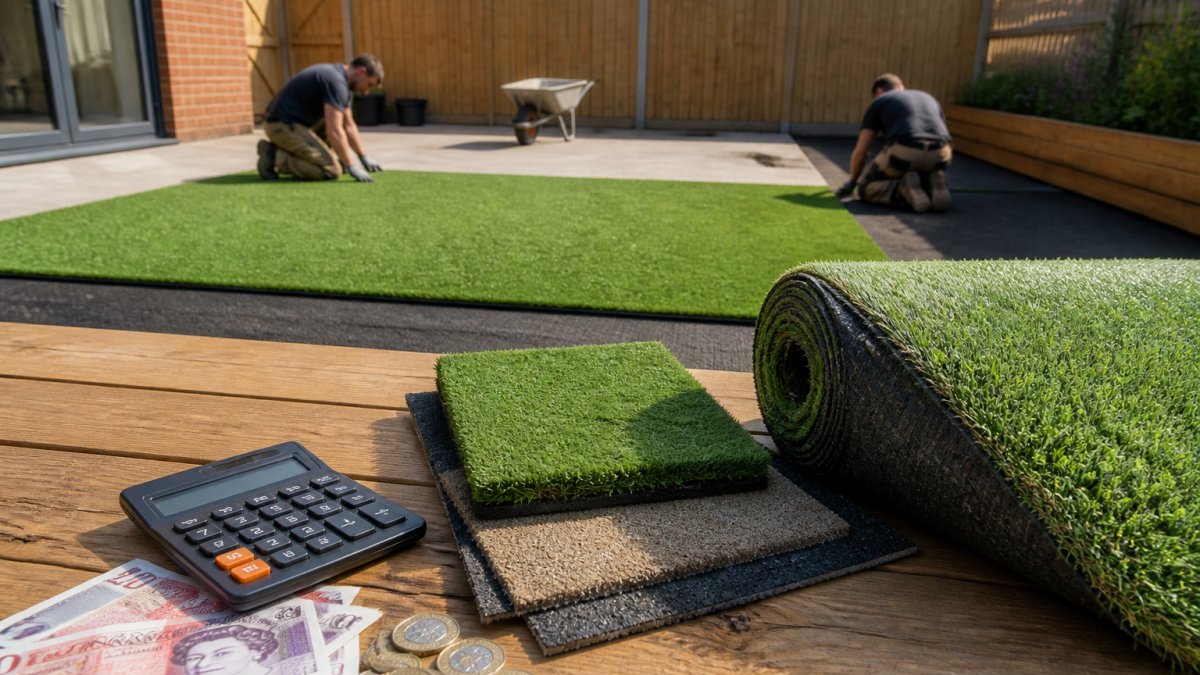
Garden landscaping cost depends on size, access, ground conditions, materials and drainage requirements, not on a single headline rate. Two gardens of identical size can differ substantially if one needs retaining walls or a new drainage system.
The main cost drivers:
- Area and complexity: straight runs cost less than curves, steps and multiple levels.
- Access: narrow side entrances mean manual carrying and slower work.
- Ground conditions: slopes, clay soil and poor drainage add groundwork.
- Materials: porcelain, natural stone and composite decking sit at different points.
- Drainage: soakaways and land drains are invisible but essential.
We quote against a fixed scope so you know what is included before work starts. Ask any contractor what happens if unexpected ground conditions appear, and get the answer in writing.
Garden Renovation Ideas for Underused Space
The most underused garden areas are usually the side return, the shady strip behind the shed and the awkward corner too narrow to mow. These are renovation opportunities, not dead space.
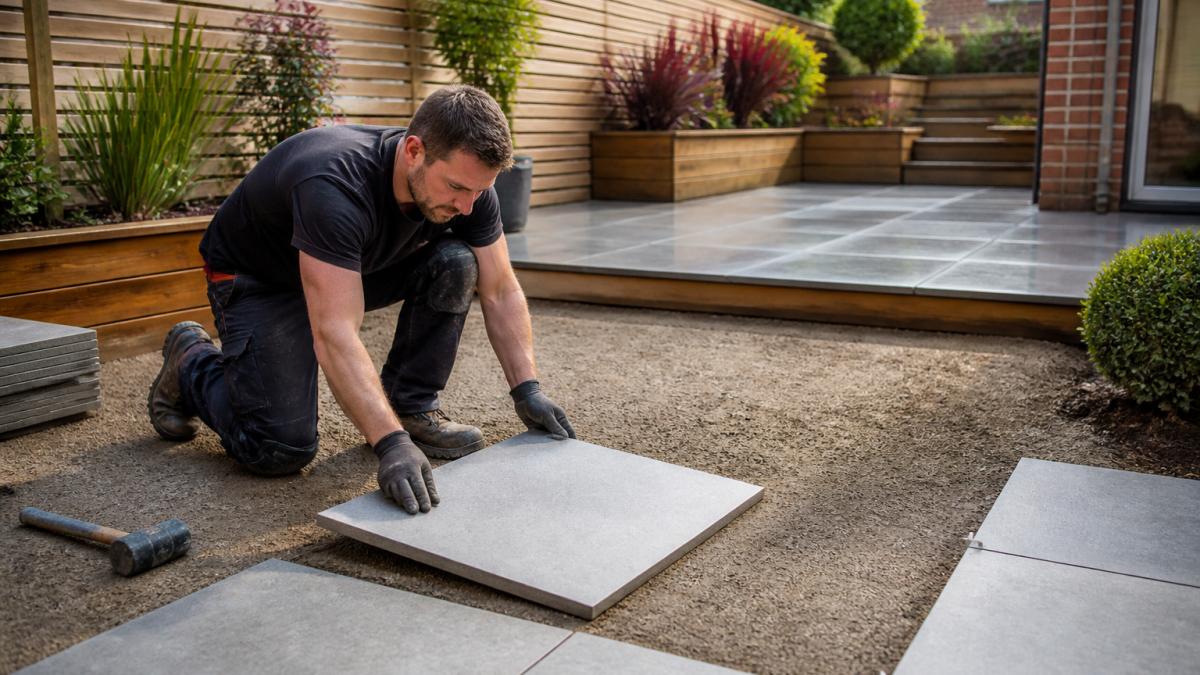
Practical options we build regularly:
- Convert a side return into a gravel and planting strip with a stepping-stone path.
- Turn a shady corner into a seating nook with decking and shade-tolerant planting.
- Replace a struggling lawn with a paved dining area and raised beds.
- Add a low retaining wall to create a usable level on a sloping plot.
- Screen a bin store or shed with fencing and climbing plants.
The common thread is function. A garden earns its keep when every zone has a purpose, whether that is eating, playing, growing or simply sitting.
Low-Maintenance Garden Ideas That Still Look Good
Low-maintenance garden ideas work by reducing the jobs that eat weekends: mowing, edging, weeding and watering. The trick is replacing high-effort elements with structure, not with bare surfaces.
What works:
- Artificial grass for play areas, removing mowing and mud entirely.
- Porcelain paving with tight joints, which resists staining and needs only sweeping.
- Gravel borders over a membrane, cutting weeding to a minimum.
- Raised beds that bring planting to a workable height and control soil.
- Evergreen structure such as shrubs and small trees for year-round interest.
- Drainage designed in, so surfaces stay usable after rain.
What to avoid: narrow lawn strips that need edging, fast-spreading ground cover near paving, and intricate planting schemes that demand weekly attention.
A low-maintenance garden still needs some care. The goal is fewer, simpler tasks, not zero.
Questions to Ask a Landscaper Before You Sign
Ask these before signing anything. The answers tell you more about a contractor than any portfolio.
- What exactly is included in the quote, and what would change it?
- How will you handle drainage and levels?
- Who does the work, your own team or subcontractors?
- What is the payment schedule, and how much is due upfront?
- What warranty covers the workmanship, and for how long?
- How long will the project take, and what happens in bad weather?
- Can I see completed projects similar to mine?
- How will you protect access routes and neighbouring property?
Red flags: pressure to pay a large deposit in cash, no written scope, vague answers on drainage, and no willingness to put guarantees in writing. A contractor who cannot explain the drainage plan has not thought about it.
Conclusion
The hardest part of garden landscaping is not choosing a style. It is finding a team that sticks to the agreed scope, explains the groundwork honestly and finishes to a standard you would recommend to a neighbour.
That is the standard we hold ourselves to at Custom Landscapes. We work to your budget with a fixed, written scope, build in proper drainage and sub-bases so surfaces last, and install paving, decking, artificial grass, turfing and fencing as one coordinated scheme. Our customers tell us the difference is in the quiet, careful work and the willingness to discuss details as the project progresses.
Get a quote from Custom Landscapes and turn the space you have into a garden you actually use.
Frequently Asked Questions
What services do garden landscapers offer?
Garden landscaping services for homeowners usually cover hard landscaping such as paving, decking, fencing and gravel gardens, plus soft landscaping like turfing and planting. Many teams also handle artificial grass, drainage improvements and groundworks before any surface goes down. Ask for a written scope so you know exactly what is included, and confirm whether waste removal and site clearance are part of the quote or charged separately.
How much does garden landscaping cost?
Garden landscaping cost varies with the size of the space, the materials chosen, access to the site and how much groundworks is needed. Paving and decking cost more per square metre than gravel or turf, and drainage fixes add labour. Because every garden is different, ask for an itemised quote rather than a single figure, and get the payment schedule in writing so you can see what each stage covers.
How do I choose a reliable garden landscaping company?
Check that the company can show recent work you can visit, ask for references from jobs similar to yours and confirm they carry the right insurance. Read the quote carefully for what is excluded, and ask how changes are priced mid-project. A provider that welcomes questions about drainage, materials and timelines is usually the one that sticks to the budget it quoted.
How long does a garden landscaping project take?
Smaller jobs such as a patio or artificial grass installation often run to a week or two, while full renovations with groundworks, drainage and multiple surfaces take longer. Weather and access affect the schedule. Ask for a start date and a rough sequence of stages in writing, and confirm when the space will be usable again so you can plan around it.
Do I need planning permission for garden landscaping?
Most garden landscaping work falls under permitted development, but there are limits. Decking or raised platforms over 30 centimetres high, and hard surfaces covering more than five square metres in a front garden, can need permission. If your property is listed or in a conservation area, check with your local planning authority before work starts. Ask your landscaper whether they handle this or whether it sits with you.
How can I make my garden easier to maintain?
Choose surfaces that need little upkeep: porcelain paving instead of small gravel, artificial grass instead of a lawn that needs regular mowing, and raised beds instead of open borders. Fix drainage at the same time so you are not dealing with waterlogged ground each winter. Grouped planting and a clear edge between beds and paving cut weeding and trimming time considerably.