 blog
Modern Backyard Renovation Ideas 2026: 7 Looks That Last
Table of Contents
- Start With a Functional Layout, Not a Shopping List
- Multi-Functional Outdoor Living Spaces and Zoning
- Low Maintenance Garden Design Ideas That Still Look Good
- Modern Paving and Decking Trends 2026
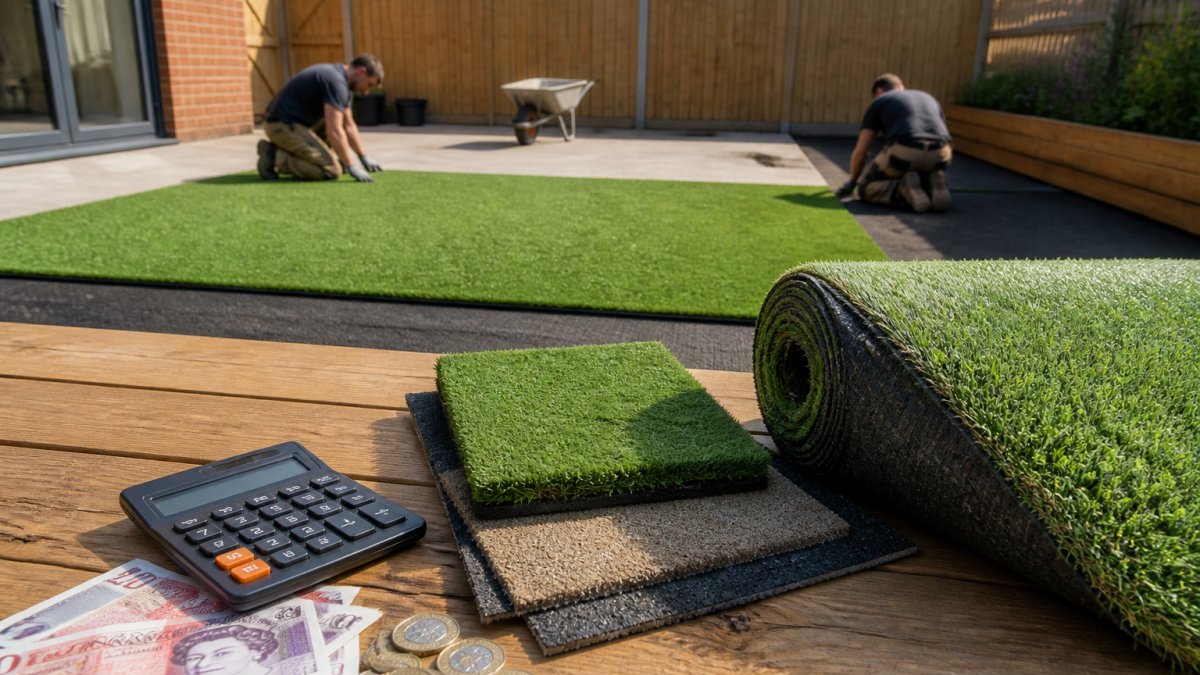
- The Cost of Garden Landscaping UK: Budgeting and Scaling
- Climate-Resilient Planting, Sustainability and Biodiversity
- Layered Lighting, Wellness Hubs and Smart Integration
- DIY vs Professional Installation and Maintenance Requirements
- Frequently Asked Questions
Last Updated: October 21, 2026
Start With a Functional Layout, Not a Shopping List
The biggest mistake in any backyard renovation is buying features before you know how you'll use the space. A functional layout comes first, and everything else follows from it. Gardens can be transformed by a simple zoning plan before a single paving slab goes down.
Modern backyard renovation ideas in 2026 work best when they start with how you actually live. Ask three questions:
- Where does the sun hit at midday and in the evening?
- Where do children and pets need clear, safe space?
- Where do you want to sit, cook and entertain?
Draw those zones on paper before you spend a penny. A clear plan stops you wasting money on features that fight each other.
The Royal Horticultural Society's garden design guidance is a solid starting point for working out aspect, soil and light before you commit to a layout.
Multi-Functional Outdoor Living Spaces and Zoning
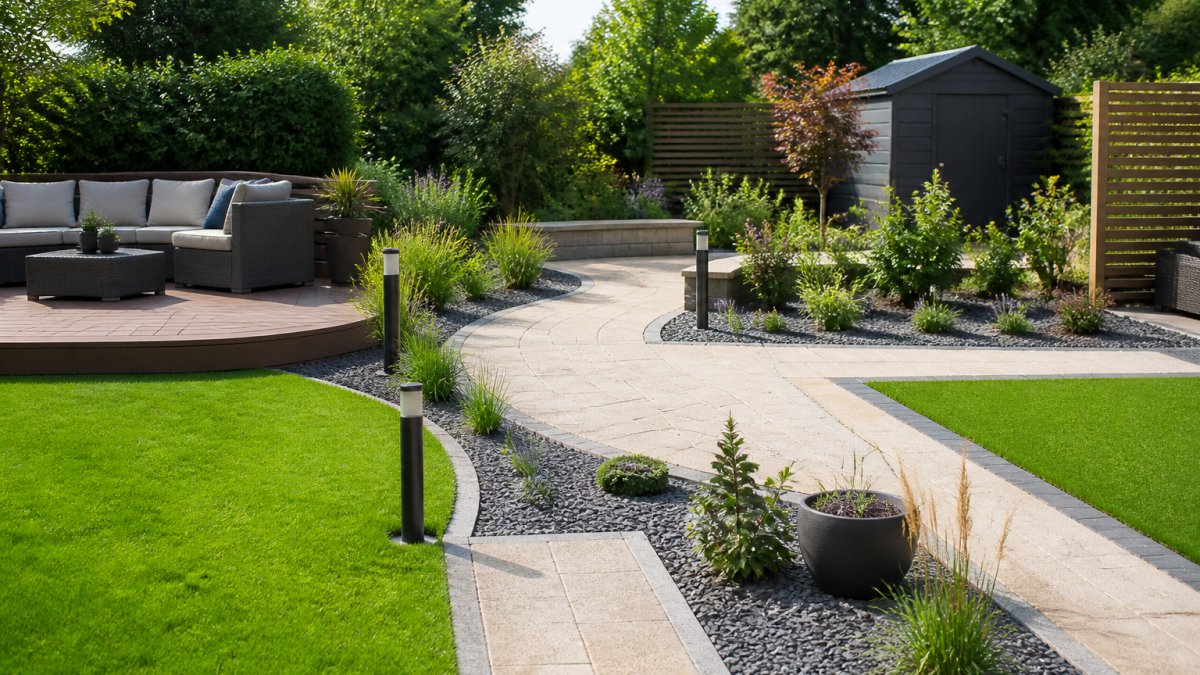
A well-zoned garden fits more into the same footprint. Zoning means splitting your outdoor space into clear areas for cooking, dining, play and quiet.
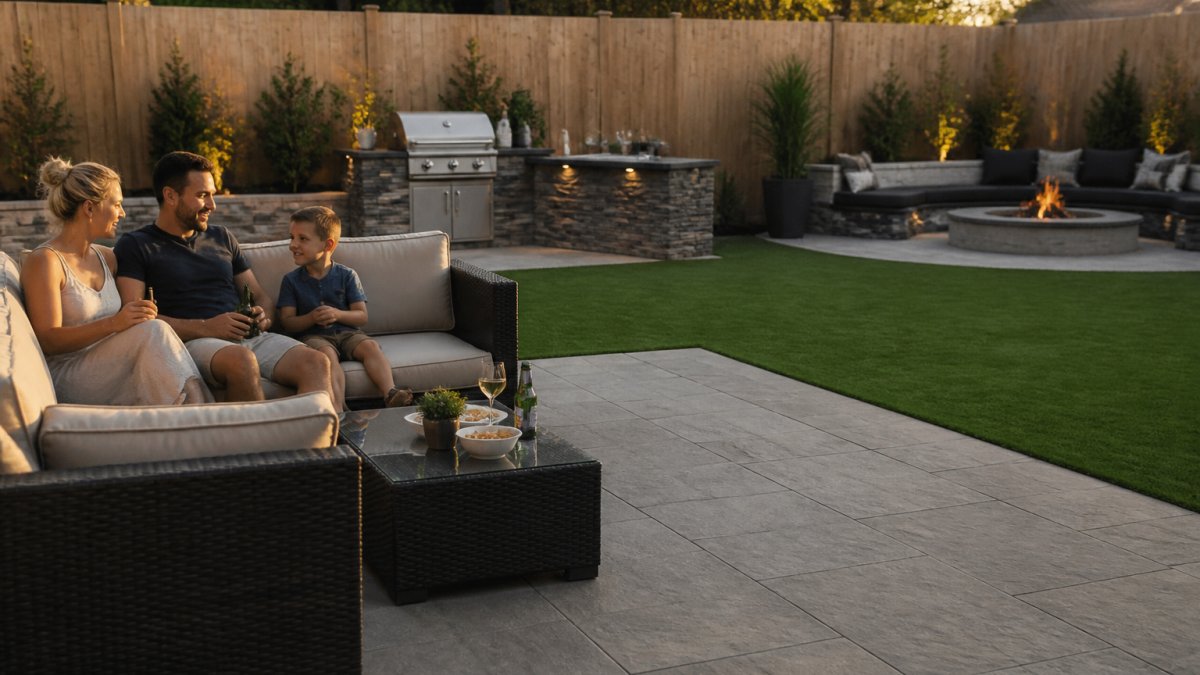
Think of a modern garden as a series of rooms without walls.
Multi-functional design also means surfaces that work harder. A porcelain patio handles dining, play and foot traffic. A timber bench doubles as storage. Every element earns its place.
Low Maintenance Garden Design Ideas That Still Look Good
Low maintenance garden design ideas don't mean bare and boring. The trick is choosing materials and plants that look sharp with very little input. That balance is where most low-maintenance gardens succeed or fail.
Start with the hard landscaping. Porcelain paving, composite decking and decorative gravel all hold their looks with minimal effort. Artificial grass gives you a green lawn all year without mowing, watering or mud.
Then pick plants that survive on their own:
- Evergreen shrubs for year-round structure
- Drought-tolerant perennials that need little watering
- Native planting that suits local soil and wildlife
Modern Paving and Decking Trends 2026
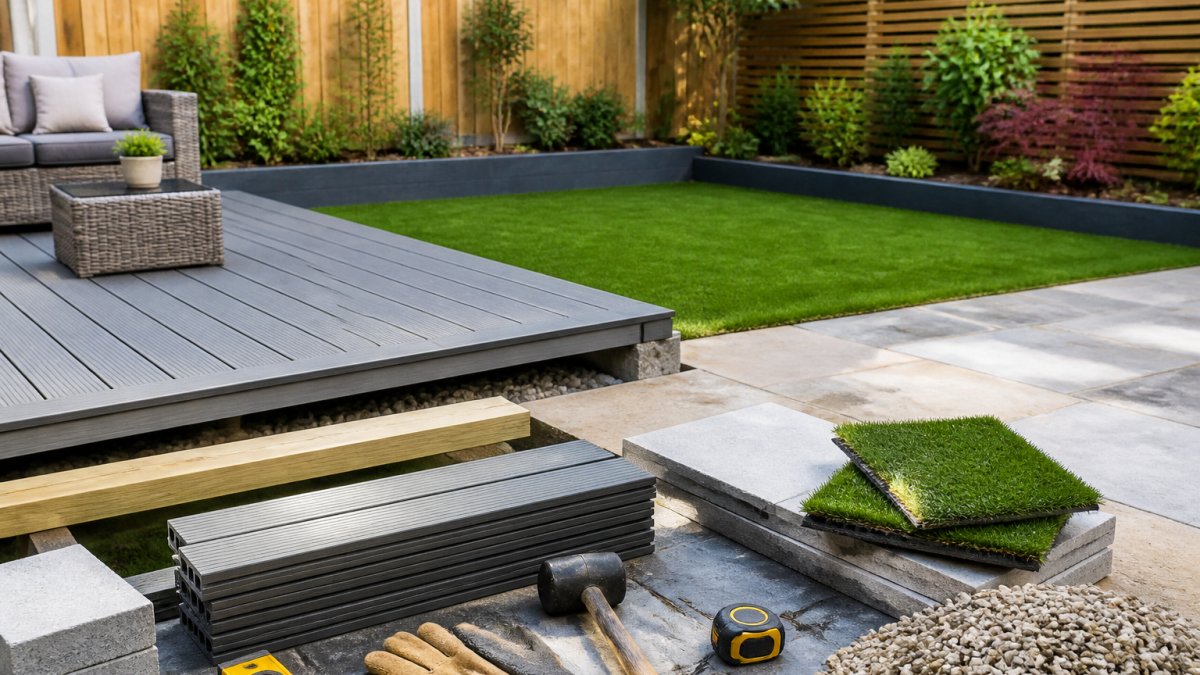
Modern paving and decking trends in 2026 lean toward clean lines, natural textures and surfaces that age well.
Composite decking is gaining ground too. It resists rot and doesn't need annual staining, which makes it a smart pick for busy households.
Here's how the main options compare:
| Material | Look | Upkeep | Best For |
|---|---|---|---|
| Porcelain paving | Sleek, stone-effect | Very low | Patios and dining zones |
| Composite decking | Warm, wood-effect | Low | Raised areas and seating |
| Decorative gravel | Natural, textured | Low | Borders and gravel gardens |
| Natural stone | Classic, varied | Medium | Traditional settings |
Contemporary paving works best when the joints are tight and the pattern is simple. Fewer, larger slabs make a small garden feel bigger.
Government guidance on planning permission for patios and hard surfaces explains when a new patio or driveway may need approval, so check before you dig.
The Cost of Garden Landscaping UK: Budgeting and Scaling
Most 2026 trend round-ups assume a blank cheque. In reality, the biggest underserved question is how to phase a modern backyard renovation across two or three years without the garden looking half-finished in between.
A useful starting framework is to split spend into three tiers and decide which tier each element belongs to:
- Structural tier (hardest to change later): drainage, levels, retaining walls, base preparation, electrical ducting for future lighting. These should be funded first even if they are invisible on completion day.
- Surface tier (defines the look): paving, decking, fencing, lawn or artificial turf. These can be phased zone by zone.
- Layer tier (easiest to add later): planting, furniture, lighting, water features, outdoor kitchen appliances. These can be introduced over subsequent seasons.
A common pattern among landscapers is that clients who reverse this order, buying a pizza oven and a fire pit before sorting drainage, end up paying twice, because the features have to be lifted and reinstated when the groundworks are finally done.
How to scale a renovation across phases
A practical three-phase plan for a typical suburban garden might look like this:
- Phase one (year one): groundworks, drainage, sub-base, ducting for power and irrigation, and one hard-landscaped zone (usually the patio nearest the house). This is the phase where professional installation pays for itself, because mistakes here are the most expensive to correct.
- Phase two (year two): second zone, decking, gravel garden or play area, plus fencing and the first round of structural planting (evergreens and trees, which need time to establish).
- Phase three (year three): lighting, outdoor kitchen, furniture, and the layer-tier planting that gives the garden its finished character.
This sequencing also spreads the cash flow. Rather than committing the full budget in one season, the homeowner funds the irreversible work first and the reversible, upgradeable elements later, which is also the order that protects resale value if plans change.
Getting quotes that actually compare
When requesting quotes, ask for a fixed written quote broken down by zone and by tier, with a clear scope statement covering excavation, waste removal, sub-base specification, and whether VAT is included. Quotes that lump everything into one figure are difficult to compare and easy to inflate later through variations. Ask each contractor to state what is excluded as well as what is included, the exclusions are where budget overruns usually hide.
Government guidance on planning permission for patios and hard surfaces is worth checking before phase one, because drainage and surface-water rules can affect what you are allowed to build and therefore how the budget should be allocated.
Climate-Resilient Planting, Sustainability and Biodiversity
Climate-resilient planting is the quiet hero of a modern garden. As summers get hotter and rainfall more erratic, gardens that cope with both extremes look better for longer.
Xeriscaping, or planting for low water use, suits dry spells. Gravel gardens, drought-tolerant perennials and mulched beds hold moisture and cut watering.
Biodiversity matters too. Native planting supports pollinators, and permeable surfaces let rain soak away instead of running off. Small choices add up:
- Choose permeable paving or gravel over solid concrete
- Add a water feature or bird bath
- Leave a wild corner for insects and wildlife
The Wildlife Trusts' guidance on gardening for wildlife has practical ideas that fit almost any garden.
Layered Lighting, Wellness Hubs and Smart Integration
Layered lighting is the difference between a garden that is usable after dark and one that is merely visible. The principle is to combine three or four light types rather than relying on a single source:
- Ambient layer: soft wash lighting on walls, fences or planting to give overall background glow.
- Task layer: focused light over the outdoor kitchen, dining table or steps, where people need to see what they are doing.
- Accent layer: uplights on trees, silhouettes on sculpture or architectural planting, and low-level path lights that mark routes without glare.
- Feature layer: fire pits, water features or integrated LED strips that provide atmosphere rather than illumination.
Warm colour temperatures (around 2700K) suit outdoor spaces; cooler whites read as harsh and clinical against foliage. Low-voltage systems are now the default for garden lighting because they are safer to install and easier to extend zone by zone.
Smart integration in 2026
Smart integration is where most trend articles stop at 'app-controlled lights' without explaining what is actually worth automating. The categories that deliver real value are:
- Smart irrigation: weather-aware controllers that adjust watering based on local rainfall and soil moisture, rather than running a fixed schedule. These are particularly useful for raised beds, containers and newly planted borders, which dry out faster than established beds.
- Smart lighting: app- or voice-controlled circuits that let you set scenes, a warm low-level setting for evening dining, brighter task lighting for cooking, and a security setting for when you are away.
- Smart outdoor sockets and switches: app-controlled power for water features, heaters and outdoor kitchen appliances, so nothing is left running unnecessarily.
- Smart security: motion-triggered cameras and lights integrated with the same app, which is increasingly the reason homeowners upgrade their garden electrics in the first place.
The practical constraint is connectivity. Wi-Fi rarely reaches the far end of a garden reliably, so plan for a mesh node or a wired data run to the main entertainment zone during phase one of the renovation. Retrofitting connectivity later is possible but messier.
Wellness hubs
Wellness hubs work best when they are deliberately under-lit and acoustically sheltered. A meditation or yoga corner benefits from a solid backdrop (a fence, hedge or wall) to block wind and neighbour noise, a level surface, and lighting that can be dimmed to near-zero. A fire pit zone, by contrast, needs brighter task lighting for serving and seating, plus a clear safety perimeter.
DIY vs Professional Installation and Maintenance Requirements
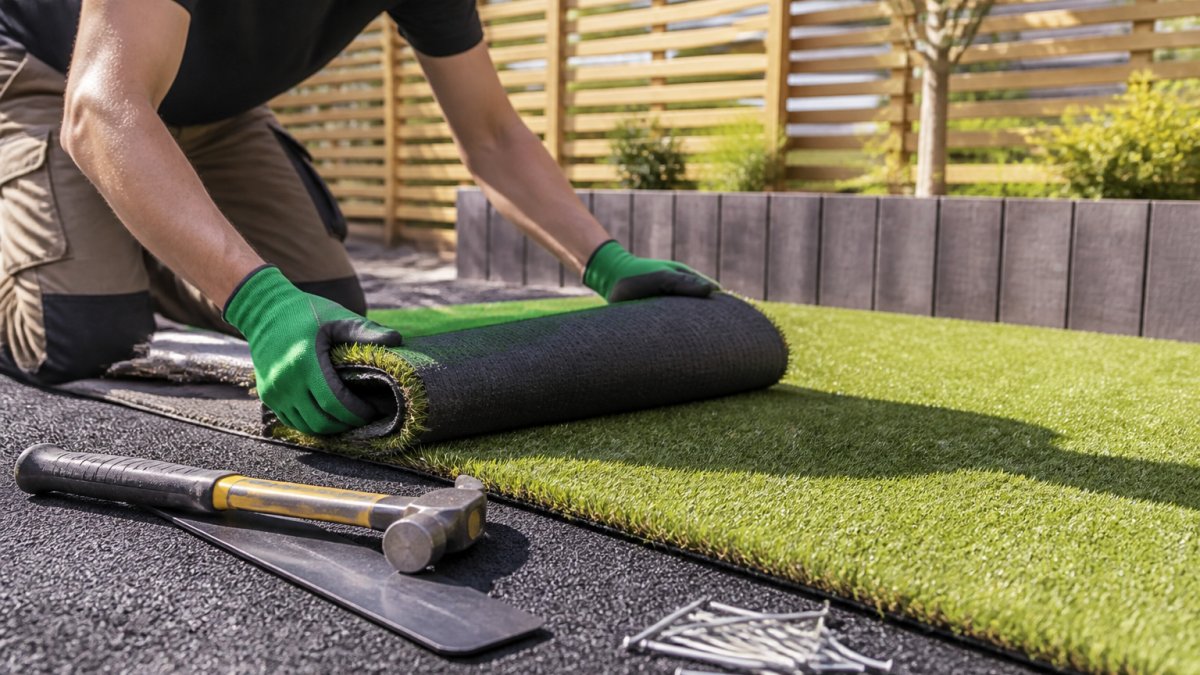
DIY vs professional installation comes down to scale, safety and time. Small jobs like planting, gravel borders and simple furniture assembly suit a confident DIYer.
The reason is simple. Bad drainage, uneven paving or poorly fixed decking all fail within a few seasons. Fixing them costs more than getting them right first time.
Maintenance requirements depend on what you build:
- Artificial grass: occasional brushing and rinsing
- Porcelain paving: a sweep and wash, no sealing needed
- Composite decking: a yearly clean with mild soap
- Gravel gardens: top up and weed now and then
A good design keeps maintenance low from day one. That's the promise behind every project we take on at Custom Landscapes.
Frequently Asked Questions
What backyard trends are predicted for 2026?
Expect zoning over open lawns, multi-functional outdoor living spaces and low maintenance garden design ideas. Permeable surfaces, decorative gravel and porcelain paving replace plain turf, while climate-resilient planting and xeriscaping cut water use. Layered lighting, fire pits and small wellness hubs extend evening use. Smart irrigation and lighting controls are appearing in more projects, and homeowners are asking for clear maintenance plans and staged budgets before work starts.
What are the current backyard design trends?
Current trends favour functional layout over decoration. Homeowners are dividing space into zones for cooking, dining and play, using hardscaping and softscaping to separate them. Raw materials and natural textures, vertical gardening and privacy screening add depth. Contemporary paving in large-format porcelain, composite decking and artificial grass reduce upkeep. Water features and fire pits add sensory interest, and native planting supports biodiversity while keeping the garden looking established all year.
How can I renovate my garden on a budget?
Scale the project in stages rather than cutting quality. Start with drainage and a functional layout, then add paving, planting and lighting later. Choose low maintenance garden design ideas such as gravel gardens, artificial grass and permeable surfaces to reduce long-term costs. The cost of garden landscaping UK varies widely with size and materials, so ask for an itemised quote and agree a fixed scope before work begins. A staged plan keeps cash flow manageable without compromising the finish.
Which low-maintenance materials are best for modern gardens?
Porcelain paving, composite decking, artificial grass and decorative gravel are the most practical choices for a modern backyard renovation. Porcelain resists stains and frost, composite decking needs no annual staining, and artificial grass works well for families with children and pets. Permeable surfaces and gravel gardens help with drainage and reduce weeding. Pair them with native planting and privacy screening to soften hard edges and support biodiversity without adding weekly maintenance.
A backyard renovation only pays off when it's built to last and fits your budget. If you want a space that works for children, pets and entertaining without endless upkeep, Custom Landscapes can help. We offer paving, decking, artificial grass, turfing, gravel gardens and fencing, all designed around durable, low-maintenance solutions that increase your home's value. Get a quote from Custom Landscapes and turn your garden into a space you'll actually use.